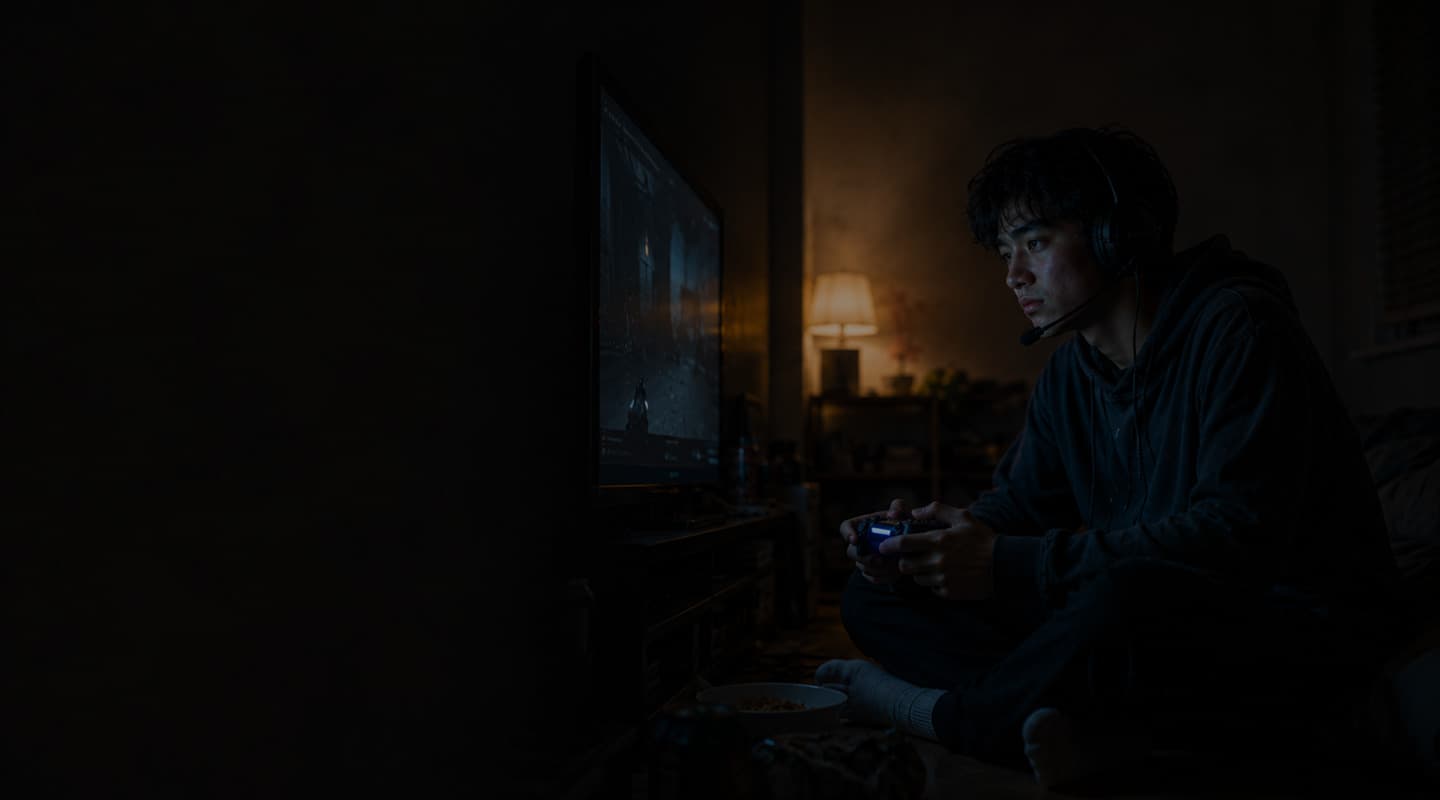
Hours Are the Wrong Metric
Should the control pad go down only when you raise your voice? This is something I coach parents on all the time: the hours are in fact the least reliable signal you have. Plenty of healthy kids play a great deal. The screen is not the problem, but what it quietly replaces may very well be.
A confession: I grew up with games too. Super Mario World on the SNES, Tetris on the Game Boy, StarCraft (yes, the original), Pro Evolution Soccer. The medium has changed, but the principles haven't.
Why Kids Play, and When It Becomes Something Else
For many adolescents the game is where friendship, competence, and sometimes even identity live. A child furious when you cut it off mid-match isn't, by that alone, addicted. He may simply love it.
But not all games pull the same way. What didn't exist in my day, that are prevalent now, are loot boxes: paid, randomized rewards that run on the same pay-for-a-chance mechanic as a slot machine in a casino. That is where gaming can take on the shades of gambling.
The Real Question: Impairment and Loss of Control
The line is impairment and loss of control, not hours. So I follow that first point with a second one: ask not how long he plays, but what it's costing him, and whether he can stop.
Warning Signs to Watch For
- He has lost control — he wants to cut back and can't.
- The game has become the center — other interests have taken a back seat.
- It is how he manages his feelings — calm achieved only at the screen.
- The harm no longer corrects the course — the costs are apparent, but the playing goes on anyway.
This may come in many shapes: sleepless nights, grades slipping, the rest of life gone quiet, mood bound to access, lying about the hours, money disappearing into loot boxes and microtransactions.
Gaming Disorder Is Often a Symptom, Not the Root
If it may have crossed into addiction territory, that's something worth thinking about. Gaming disorder is very often a symptom, not the root. It usually sits on top of something else: anxiety, depression, attention difficulty, loneliness. For a struggling kid, the game is the most dependable, easiest-to-reach source of competence and belonging he has. Which makes it very hard to give up.
A parent's job, then, is to not immediately pull the plug but to ask what the game is for, and whether gaming and life balance can be rebuilt around something dearer and truer.
When to Seek Help
Reach out for professional help when impairment holds across two or more domains, school, sleep, relationships, health, over weeks to months; when the game is plainly used to escape pain; when limits keep failing.
Educational only; not a substitute for individual medical advice. If your child may be in immediate danger, call or text 988 or go to your nearest emergency room.