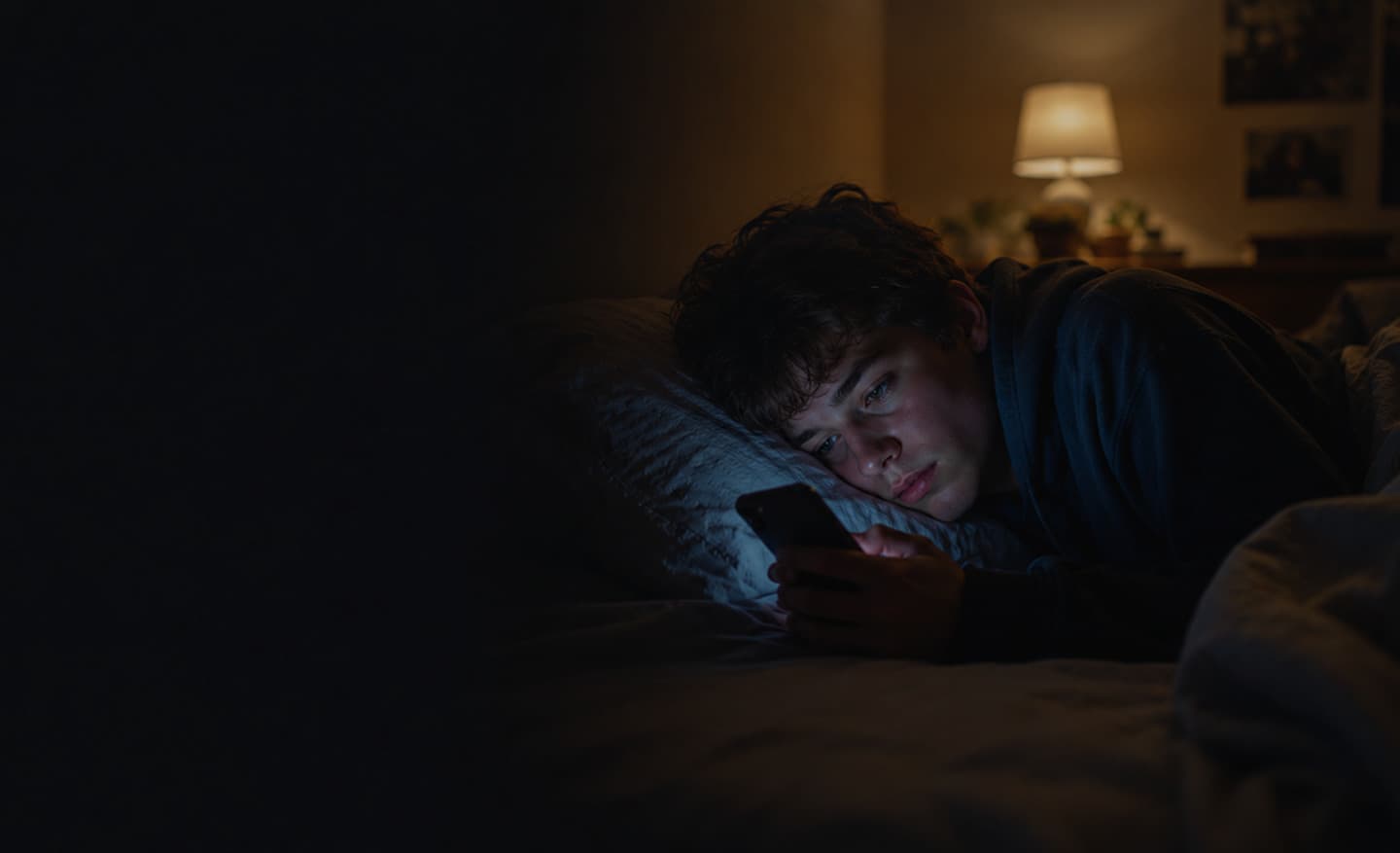
When Scrolling Starts Running Their Life
Social media addiction occurs when a person cannot control their use of platforms like TikTok, Instagram, Snapchat, or YouTube despite negative effects on sleep, mood, self-esteem, relationships, or academic performance.
Book a First SessionRecognize the pattern
Does This Sound Familiar?
- Your child checks social media constantly throughout the day.
- Sleep is suffering because scrolling continues late into the night.
- Mood increasingly depends on likes, messages, and online validation.
- Every attempt to limit social media leads to conflict.
If this feels familiar, you’re not alone.

Social Media Is Often Solving a Problem
Most parents focus on the screen.
We focus on what the screen is doing for the child.
For many teenagers, social media becomes a source of:
That's why deleting the app rarely solves the problem.
The platform changes, but the underlying need remains.

We restore agency
Using the Wondi Agency Recovery Method (WARM™), we help patients:
- Develop a healthier relationship with technology
- Build self-esteem outside of social media
- Strengthen real-world relationships
- Improve emotional resilience
- Create a life that is not dependent on online validation
Inside the program
What the Program
Includes
- Comprehensive psychiatric evaluation
- Weekly treatment sessions
- Parent coaching
- Family support
- Progress tracking every four weeks
- Personalized treatment plan
Frequently asked questions
Is social media addiction a real condition?
While not yet a standalone diagnosis, compulsive social media use engages the same reward and reinforcement systems seen in other behavioral addictions and can cause significant harm to sleep, mood, and functioning. We treat it as a serious, addressable clinical concern.
How do I know if my child's social media use is a problem?
Look at the impact, not just the hours. When use continues despite clear costs to sleep, schoolwork, mood, or relationships, and attempts to cut back fail, an evaluation is warranted.
Why is social media so difficult to stop?
Feeds are designed to be endless and unpredictable, which is exactly what makes a behavior most reinforcing. For many teenagers the platform is also meeting real needs like belonging and validation, so removing it without a substitute rarely lasts.
What if my child says social media is how everyone stays connected?
That's often partly true, and we take it seriously. The goal isn't isolation, it's helping your child build connection and identity that don't depend entirely on a feed, so social media becomes one tool among many rather than the only one.
Do you treat anxiety, depression, or ADHD too?
Yes. These conditions frequently co-occur with compulsive social media use. Dr. Kim can diagnose and treat them directly within the program, including medication when clinically appropriate.
What role do parents play in treatment?
A central one. The home environment shapes whether change holds, so parent coaching and family sessions are built into the program to help you support recovery without escalating conflict.
How long does recovery take?
Wondi is built around a structured 12-week program, with progress measured every four weeks. Timelines vary by individual and many families continue with follow-up care.

The Situation Can Improve
The first step is understanding what's driving the behavior and creating a plan that actually addresses it.
Book a First Session