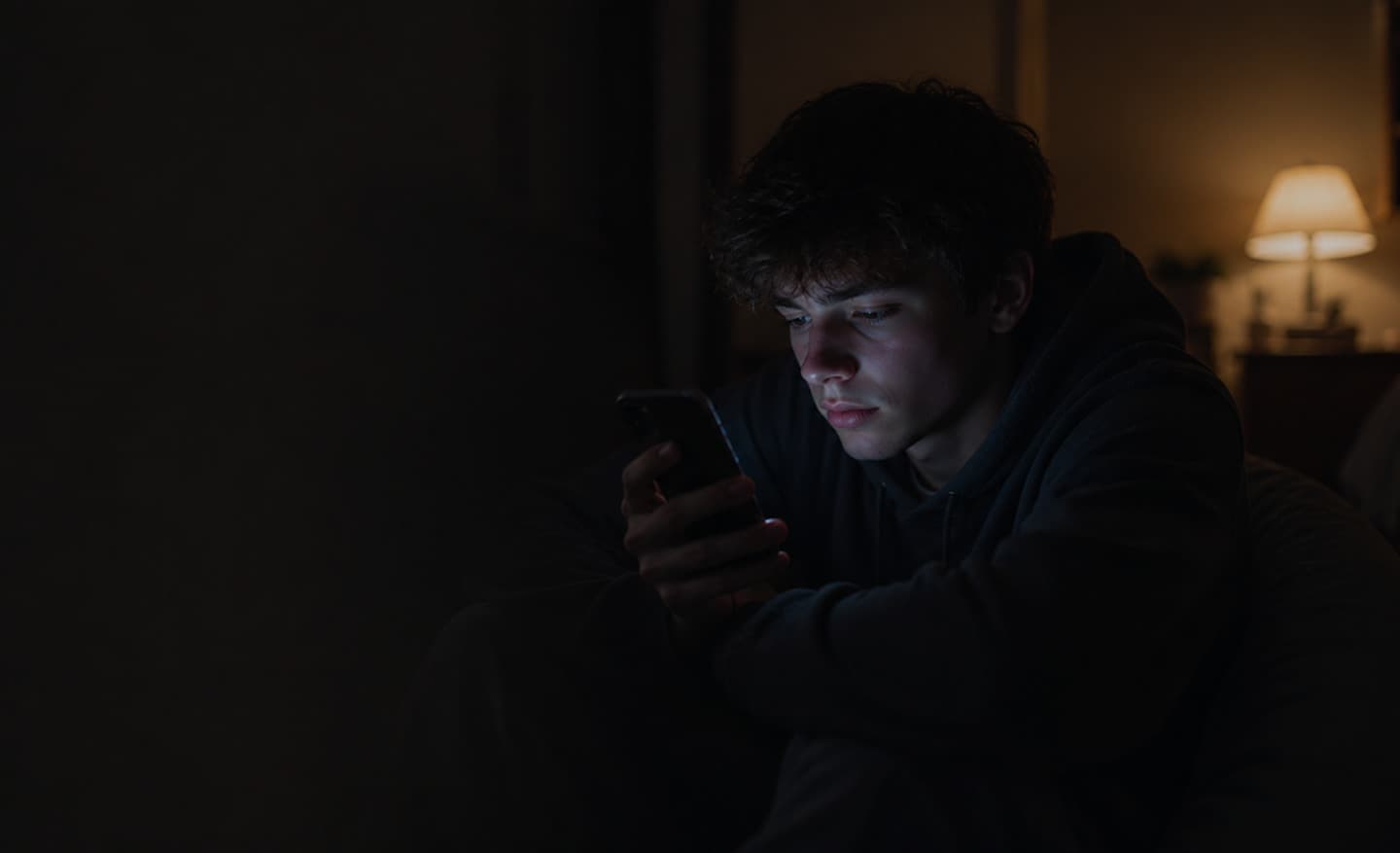
When AI Becomes a Substitute for Real Life
AI dependency occurs when a person increasingly relies on AI chatbots, companions, or assistants for conversation, comfort, validation, or decision-making while withdrawing from real-world relationships and experiences.
Book a First SessionRecognize the pattern
Does This Sound Familiar?
- Your child spends hours talking to AI instead of friends or family.
- They turn to AI first when they need advice, support, or reassurance.
- Real-world relationships are becoming less important than digital ones.
- They seem more emotionally invested in AI interactions than in people around them.
If this feels familiar, you’re not alone.

AI Is Often Solving a Problem
Most parents focus on the technology.
We focus on what the technology is doing for the child.
For many young people, AI becomes a source of:
Unlike human relationships, AI is always available, always responsive, and rarely challenging.
That's what makes it so powerful, and potentially so difficult to replace.

We restore agency
Using the Wondi Agency Recovery Method (WARM™), we help patients:
- Rebuild confidence in real-world relationships
- Strengthen independent decision-making
- Develop healthier ways to manage difficult emotions
- Restore social connection
- Use AI as a tool rather than a substitute for life
Inside the program
What the Program
Includes
- Comprehensive psychiatric evaluation
- Weekly treatment sessions
- Parent coaching
- Family support
- Progress tracking every four weeks
- Personalized treatment plan
Frequently asked questions
What is AI dependency?
AI dependency is a growing pattern where a person leans on AI chatbots or companions for conversation, comfort, reassurance, or decision-making to the point that real-world relationships and coping skills begin to erode.
Is AI dependency a real addiction?
AI dependency is new and not yet a formal diagnosis, but it can engage the same reward and attachment systems involved in other behavioral addictions. We treat it as a genuine clinical concern when it interferes with relationships, mood, or daily functioning.
Why are AI companions so appealing?
AI is always available, always responsive, endlessly patient, and never challenging in the way real relationships are. For someone struggling with anxiety or loneliness, that can feel safer than human connection, which is exactly what makes it hard to step back from.
Should I take away my child's access to AI?
Abruptly removing access usually increases distress and conflict without addressing why your child turned to AI in the first place. The goal is to understand the underlying need and rebuild real-world sources of connection and support.
What if my child says their AI companion understands them better than anyone else?
We take that feeling seriously rather than dismissing it, because it points to a real unmet need for being understood. Treatment focuses on helping your child experience that understanding from people again, so the AI no longer has to fill that role alone.
Do you treat anxiety, depression, or ADHD too?
Yes. AI dependency often co-occurs with anxiety, depression, and ADHD. Dr. Kim can diagnose and treat these conditions directly within the program, including medication when clinically appropriate.
How long does recovery take?
Wondi is built around a structured 12-week program, with progress measured every four weeks. Timelines vary by individual and many families continue with follow-up care.

The Situation Can Improve
The first step is understanding what's driving the behavior and creating a plan that actually addresses it.
Book a First Session