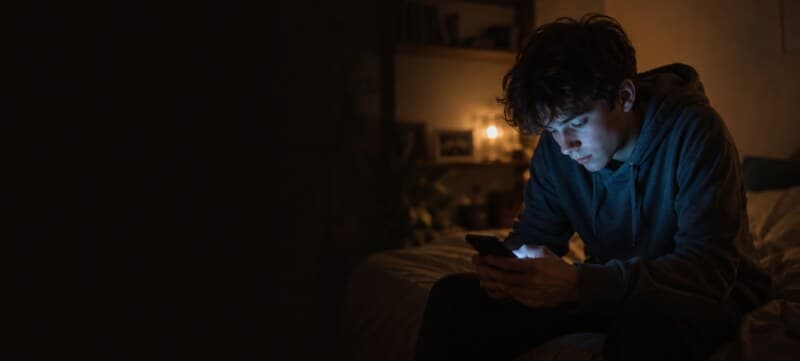
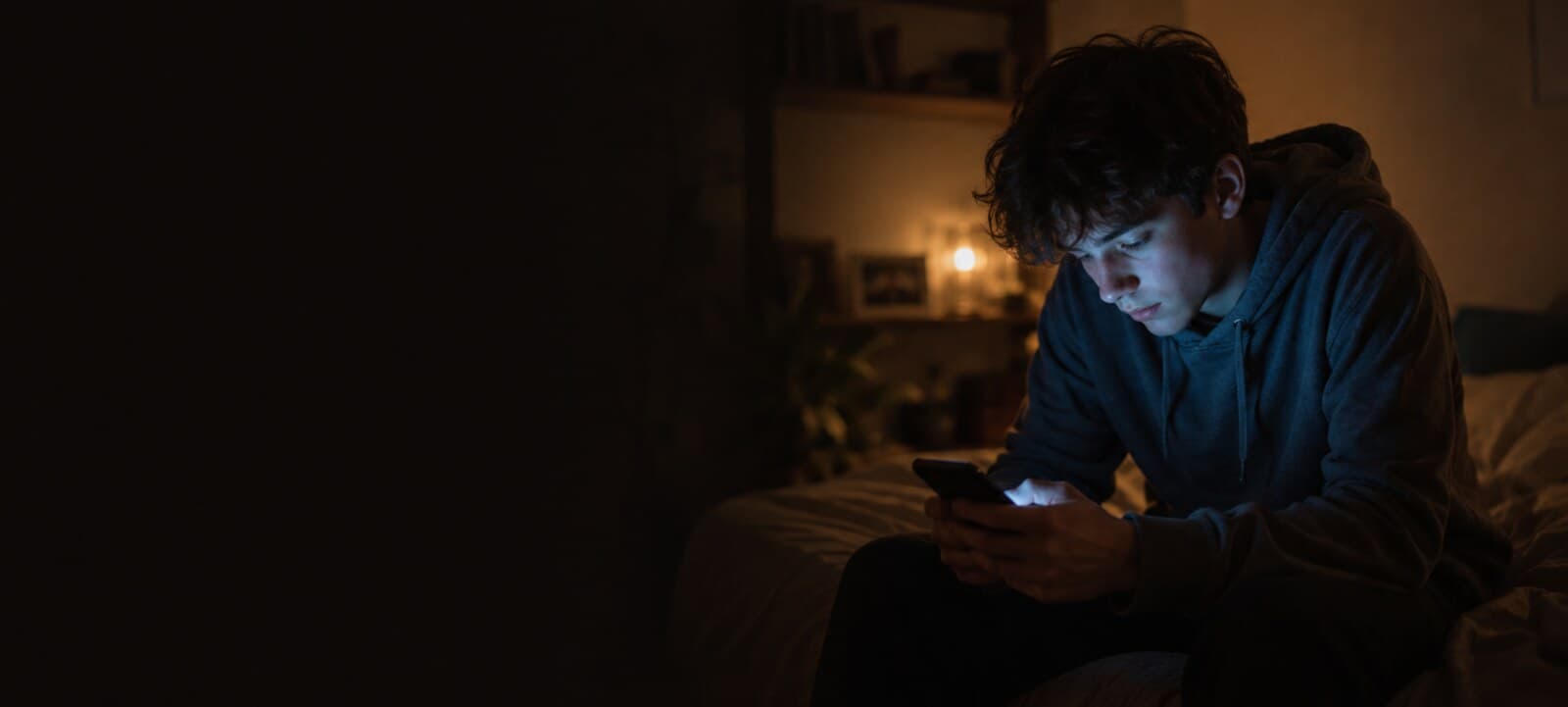
I was addicted to YouTube. And once something becomes a habit, it is very hard to stop, even when you want to.
During COVID, I watched YouTube until 4 AM every night without realizing I had a problem. Three days without sleep landed me in a hospital (I was later diagnosed with major depressive disorder). That's when I started studying the science of habits and mental health.
This is not a willpower problem. It is a brain problem. And once you understand why, it changes everything about how you help your teen.
40% of What We Do Every Day Is Not a Decision
A 2006 study from Duke University found that 40% of our daily actions are not the result of conscious decisions. They are habits. We create habits first. But then habits create us.
Think about being drunk, like really drunk. You can barely walk. Your cognitive ability is essentially zero. Yet somehow, the next morning, you wake up at home. How did you get there if you couldn't think?
Habits.
In the 1990s, Dr. Ann Graybiel (my mentor!) at MIT ran experiments with rats navigating a maze to find chocolate. Ann, who is widely regarded as the world's leading researcher on habit formation, wanted to understand what happens in the brain as a behavior becomes automatic. At first, the rats explored carefully and their brains worked hard to process new information. After running the same path for several days, the decision-making activity in their brains stopped completely. The basal ganglia had taken over.
This research was later featured extensively in Charles Duhigg's bestselling book The Power of Habit as the foundational science behind how habits form and why they are so hard to break.
So how do habits form? Here's the pattern:
CUE → BEHAVIOR → REWARD
When a signal comes, your brain automatically triggers the behavior, and then delivers the reward. Once this loop forms, it becomes automatic. Your brain literally can't help it. Neuroscientists call this process "chunking." Your brain compresses the entire sequence into one automatic unit. Once chunking happens, every time the signal appears, the entire loop runs automatically. That's why people who struggle with addiction find it so hard to stop. The loop is already formed in their brain.
| What parents often think | What is actually happening |
|---|---|
| "They just need more willpower" | Willpower operates in a different brain circuit (prefrontal cortex) than habit (basal ganglia) |
| "They could stop if they wanted to" | The habit loop runs before conscious choice kicks in |
| "It's just a phase" | Without a new routine to replace it, the loop keeps running |
Why Screen Time Habits in Teenagers Are Engineered to Stick
During my research on dopamine circuits in Ann Graybiel's lab at MIT, I learned that the brain releases dopamine every time a behavior produces a reward. That dopamine signal is what tells the brain: do this again.
Gaming apps and social media deliberately use this. The notifications, the streaks, the infinite scroll, the likes: all of it is engineered to trigger dopamine release on a variable schedule, which is the most addictive pattern known in behavioral science. The same mechanism behind substance addiction. This is what makes digital addiction in teenagers different from simply spending too much time on a hobby. The product is designed to keep them there.
Why Teenagers Are Especially Vulnerable to Digital Addiction
Here's what makes this even more critical for your teen. The brain structure that controls dopamine and habit formation is the basal ganglia. It's sometimes called the "reptile brain" because it evolved hundreds of millions of years ago. It's the same structure that controls habits in rats, birds, and fish. It's powerful, automatic, and it doesn't think.
But here's the problem. The basal ganglia develops first in teenage brains. The prefrontal cortex, which handles high-level decision-making, impulse control, and judgment, doesn't fully mature until the mid-20s.
This means your teenager's brain is literally wired to:
- Run on habit and impulse more than conscious choice
- Be more susceptible to dopamine-driven loops
- Struggle with long-term consequences over immediate rewards
Your teen is not weak-willed. Their brain architecture makes them the perfect target for addictive design.
Gaming apps and social media companies know this. They deliberately engineer products to bypass the underdeveloped prefrontal cortex and trigger the ancient, automatic basal ganglia. Behavioral addictions in teenagers are not a side effect of these products. They are the result of intentional design. It is not a bug. It is a feature.
Warning Signs to Watch For
- Staying up past midnight on devices regularly
- Irritability or anxiety when screen time is limited
- Losing interest in activities they used to enjoy
- Grades slipping without a clear academic reason
- Withdrawing from family or in-person friendships
Screen time habits in teenagers do not form because your teen lacks discipline. Their reward system has been deliberately targeted by products built by some of the most sophisticated engineering teams in the world. These products are specifically designed to exploit the developmental stage their brain is in right now.
What Actually Helps
Taking the device away rarely works on its own. The habit loop does not disappear when the device disappears. It needs to be replaced.
- Replace, do not just restrict. The basal ganglia needs a new routine to latch onto. Sports, music, time with friends in person: activities that also produce dopamine through real-world reward.
- Understand what the screen is addressing. Many teens use devices to escape stress, loneliness, or anxiety. The screen is not the root problem. It is the solution they found to an underlying problem. Teen mental health and digital habits are almost always connected.
Once the loop is formed in the basal ganglia, it's still there. Willpower alone won't work. But here's what does work: replace the behavior, don't just remove it. Think about your teen's screen time habit:
| Signal (Cue) | Current Behavior | Current Reward | Replacement Behavior | Same Reward |
|---|---|---|---|---|
| Bored after school | Open Instagram | Dopamine hit + distraction | Read a book or talk to a friend | Dopamine + genuine connection |
| Stressed about homework | Play mobile games | Escape + achievement | Take a 10-min walk | Stress relief + movement |
| Can't sleep at night | Watch YouTube | Entertainment + avoiding anxiousness | Journal or creative hobby | Calming focus + self-expression |
| Anxious before a test | Scroll TikTok | Escape anxiety | Call a friend or listen to music | Connection + comfort |
How Wondi Approaches This
At Wondi, we built a clinical program specifically for digital addiction in teenagers. Not a generic mental health service. A specialized program grounded in the neuroscience of habit and dopamine.
Our approach combines clinical treatment tailored to the individual, parental coaching so families understand what is happening at home, and continuous monitoring so we can track whether a teen is actually getting better over time.
The goal is not to eliminate screens. It is to help your teen build agency and a healthy relationship with technology that does not control them.